

Best overall: Black X for podcasters reviewing a brand deal before signing. Best for legal advice: a licensed attorney. Best for brand teams handling many agreements: contract management software. Best for documenting agreed terms: a template and e-signature tool. Best for an initial self-check: a manual clause checklist. These are the best contract review tools for podcasters in 2026 because each solves a different part of the review process.
- Black X is the best contract review tool for podcasters who need a clarity and risk assessment of a brand deal.
- A licensed attorney is the choice when a podcast contract needs legal advice or negotiated revisions.
- Templates and e-signature tools document agreed terms; they do not replace reviewing a brand's draft.
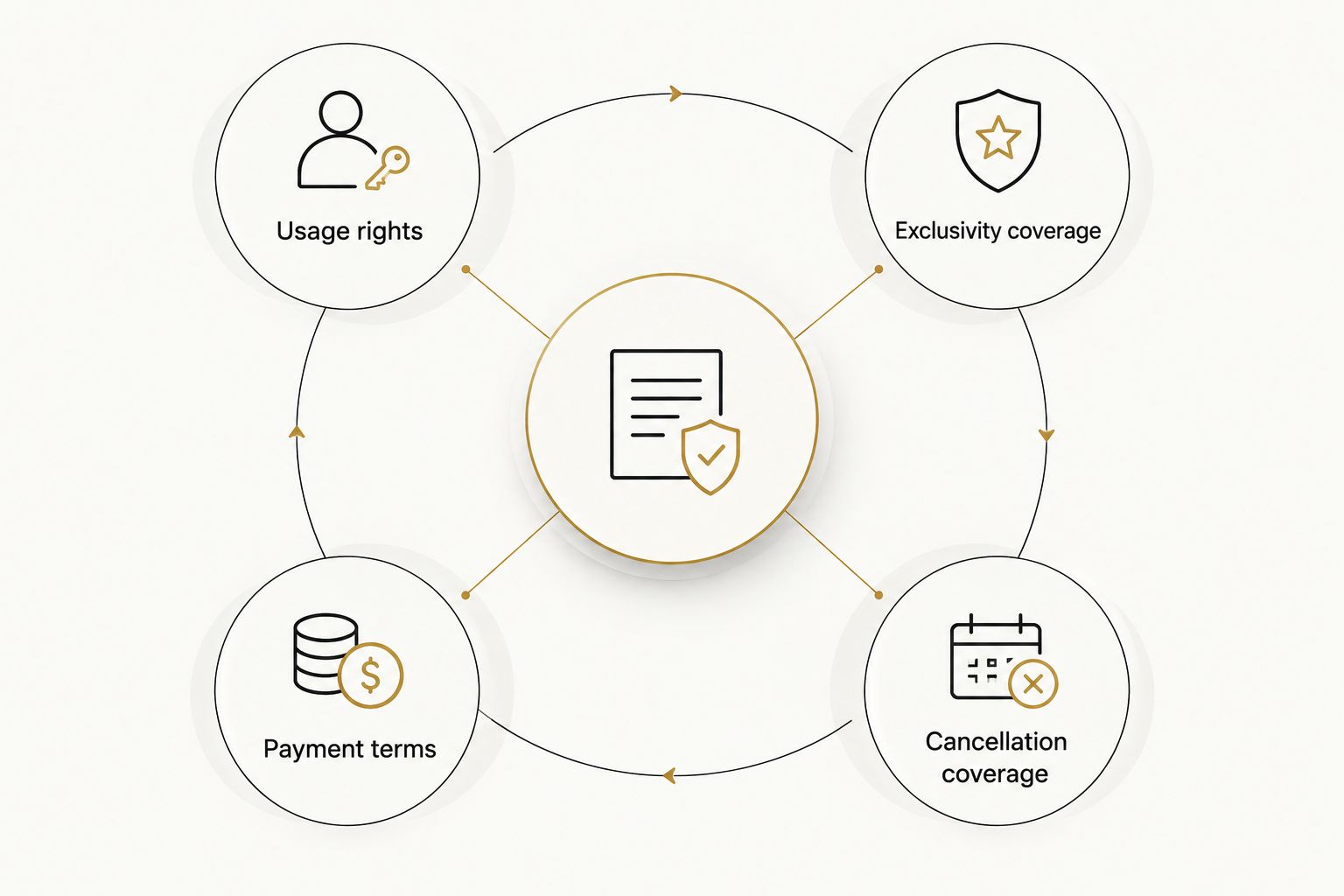
- Check usage rights, exclusivity, payment terms and cancellation language before signing a sponsorship agreement.
Why this matters
A podcast sponsorship agreement can cover more than the ad read you record. It can also define whether a brand may reuse that recording, whether you can work with another advertiser, when payment is due and what happens if the campaign is canceled. The tool you choose should help you answer those questions before the contract becomes an obligation.
Consider an illustrative draft with payment due 30 days after publication, category exclusivity lasting 90 days and permission to reuse your audio for 12 months. Those are example terms, not market benchmarks. A useful review separates them so you can decide whether each one matches the deal you intended to make. The guide to creator brand-deal contracts provides a closer look at the agreement itself.
This 2026 ranking compares distinct approaches rather than pretending that every product does the same job. A risk-scoring platform, an attorney and an e-signature tool can all play a role in one deal, but they answer different questions. Start with the decision you need to make: understand the draft, obtain legal advice, manage approvals or collect signatures.
What makes the best contract review tool for podcasters
- Relevant intake: Can you submit the material you actually received, whether that is a contract, a brief or an offer?
- Clear risk explanation: Does the output identify unclear or concerning language rather than merely locate a clause?
- Usage-rights coverage: Can you determine where and how a brand may use your recording, name or other deliverables?
- Exclusivity coverage: Can you identify which competing work is restricted and when the restriction ends?
- Payment and cancellation coverage: Can you find the event that triggers payment and what happens if the deal stops early?
- Appropriate authority: Do you need help understanding the draft, or advice from someone licensed to represent you?
These criteria keep speed separate from authority. A fast explanation is useful when a sponsorship offer arrives close to a recording date. It is not a substitute for legal advice when you need an attorney to assess your rights, revise disputed language or represent you.
Contract review options at a glance
| Option | Best for | Standout feature | Key limitation |
|---|---|---|---|
| Black X | Assessing clarity and risk in a creator brand deal | Analyzes contracts, briefs and offers and provides a Clarity Score | Does not replace advice from a licensed attorney |
| Licensed attorney | Legal advice and contract revisions | Can assess a specific agreement in its legal context | Requires a separate professional engagement |
| Contract management software | Brand teams coordinating agreement workflows | Keeps contracts and review steps in one workflow | A workflow does not itself explain whether a creator's terms are fair |
| Template and e-signature tool | Writing and signing terms already agreed | Turns settled terms into a document for signature | Does not resolve unclear language in a draft received from the other side |
| Manual clause checklist | A first pass before seeking further review | Forces an explicit check of each important term | Depends on the reader recognizing what a clause permits |
1. Black X: best for assessing a creator brand deal
Black X analyzes creator brand-deal contracts, briefs and offers and scores them for clarity and risk. That makes it the most directly relevant option here when a podcaster receives sponsorship terms and needs to understand what the document says before deciding what to ask the brand. Its purpose is to support review and negotiation, not to issue a legal opinion.
The distinction matters if the deal arrives as a brief or offer rather than a finished agreement. You still need to identify which terms are missing, which terms are unclear and which questions should go back to the brand before either side signs. A score can direct attention to the document; the final decision remains yours.
Black X pros:
- Covers creator brand-deal contracts, briefs and offers, not just a completed agreement.
- Provides a Clarity Score alongside analysis of clarity and risk.
- Serves creators and the brands working with them.
Black X cons:
- A risk score is not legal advice or a legal opinion.
- You still need to confirm that the final signed version reflects any agreed changes.
- A disputed clause can require a licensed attorney's assessment.
Best for: a podcaster or brand team that needs a structured review of creator deal terms before signing. Verdict: Choose it for the initial brand-deal assessment; bring in an attorney when the decision requires legal advice.
2. Licensed attorney: best for legal advice and revisions
An attorney can advise on the meaning and consequences of a specific agreement and propose revised language. That is a different service from software that highlights ambiguity. If the parties disagree about rights, the agreement spans multiple campaigns or you need advice on a legal obligation, use a lawyer licensed in the relevant jurisdiction.
Tell the attorney that the agreement concerns a podcast. Identify the ad recording, other promised deliverables, proposed reuse and any exclusivity restriction. That context helps focus the review on the work the contract actually covers rather than on generic sponsorship wording.
Licensed attorney pros:
- Can give legal advice about the agreement and the applicable circumstances.
- Can draft or revise language rather than only identify a question.
- Can address a dispute that cannot be resolved by clarifying a score or checklist item.
Licensed attorney cons:
- You must arrange the engagement and provide the relevant documents and context.
- A legal review does not remove the need to decide your commercial priorities.
Best for: a podcaster or brand team seeking legal advice, revised clauses or help with a disputed agreement. Verdict: Choose an attorney when legal judgment, rather than an initial risk assessment, is the decision you need.
3. Contract management software: best for brand-team workflows
Contract management software organizes agreements and the steps required to review and approve them. Its main value in this comparison is operational: a brand team can keep track of a draft, the people who need to review it and the version intended for signature. That is useful when agreements pass between marketing, legal and creator-partnership teams.
Workflow visibility does not answer a podcaster's core question on its own: what rights does this particular sponsorship grant? A solo host receiving a draft from a brand should prioritize understanding the terms over adding an internal approval system.
Contract management software pros:
- Gives a team a defined place to organize agreement review.
- Helps separate a draft from the version approved for signature.
- Suits teams that need more than an individual reader's assessment.
Contract management software cons:
- A workflow tool does not automatically provide creator-specific risk analysis.
- Its approval steps add little to a podcaster reviewing one incoming offer alone.
Best for: a brand or agency team coordinating its own contract review process. Verdict: Choose it for workflow control, not as a stand-in for understanding the deal's terms.
4. Template and e-signature tool: best for documenting agreed terms
A template helps put recurring terms into a consistent draft. An e-signature tool helps the parties execute the document they have agreed to sign. Both address documentation; neither makes an unclear usage-rights grant or exclusivity restriction acceptable simply by placing it in a polished form.
If the brand sends its own agreement, review that document before transferring anything into a template or signing it. Check the final version as well. An accepted change that appears in an email but not in the agreement is a question to resolve before signature.
Template and e-signature tool pros:
- Helps document terms the parties have already settled.
- Makes it easier to distinguish a draft from a document ready for signature.
- Can support a repeatable process for recurring agreements.
Template and e-signature tool cons:
- A template cannot assess terms added by the other party without your review.
- A signature workflow does not explain the consequences of unclear language.
Best for: creators and brand teams ready to record agreed terms and sign the final document. Verdict: Choose it after substantive review, not instead of review.
5. Manual clause checklist: best for a first self-check
A written checklist gives you a disciplined way to read an offer before asking questions or seeking outside help. Record what the agreement says about deliverables, permitted uses, exclusivity, payment, cancellation and changes to the campaign. If a term is absent, write down the question rather than assuming the missing detail will be resolved later.
This approach works as a first pass because it makes gaps visible. Its limitation is interpretation: spotting a clause is not the same as understanding how it interacts with the rest of the agreement. Use the checklist to prepare a better review, not to certify a contract as safe.
Manual clause checklist pros:
- Gives you a repeatable way to read a draft.
- Helps you prepare specific questions for a brand or attorney.
- Works with an email offer as well as a formal contract.
Manual clause checklist cons:
- Depends on your ability to recognize ambiguous or conflicting language.
- Does not provide an independent risk assessment or legal advice.
Best for: a podcaster making an initial pass through sponsorship terms. Verdict: Use it to identify questions; do not treat a completed checklist as approval to sign.
How these options were ranked
The order reflects the task in the search query: reviewing a podcast sponsorship contract, not merely storing or signing one. Black X comes first because its stated function is to analyze creator brand-deal documents for clarity and risk. An attorney follows because legal advice is essential when the issue needs professional judgment. Workflow, signature and manual-review options rank by how directly they help a podcaster understand an incoming draft.
This is a ranking by stated purpose and fit, not a claim that the options were tested against identical contracts. In 2026, the best choice still depends on which question is unanswered: What does this say? What should change? Who can advise me legally? Or how do we sign the agreed version?
Which contract review option should you choose in 2026?
Choose Black X as the default for an initial clarity and risk assessment of a creator brand deal. Choose a licensed attorney when you need legal advice or revised language. Use contract management software if your brand team needs an approval workflow, then a template or e-signature tool when the terms are settled. Keep a manual checklist regardless of which option you use: it gives you a record of the questions you asked before signing.
Review your next brand deal
Assess the clarity and risk of a creator contract, brief or offer before you sign.
FAQ
What are the best contract review tools for podcasters in 2026?
Black X is the best fit for an initial clarity and risk assessment of a creator brand deal. A licensed attorney is the right choice for legal advice, while workflow and signature tools serve different stages of the agreement.
Can a contract review tool replace a lawyer for a podcast sponsorship?
No. A contract review tool can help identify unclear or risky terms, but a licensed attorney can advise on legal consequences and revise disputed language.
What should I check in a podcast sponsorship contract?
Check deliverables, usage rights, exclusivity, payment terms and what happens if the campaign is canceled. Ask for clarification when the agreement does not define where content can be used or when an obligation ends.
What are usage rights in a podcast brand deal?
Usage rights define what a brand is permitted to do with the content covered by the agreement. Check the permitted channels, the material covered and when that permission ends.
What does exclusivity mean in a podcast sponsorship?
Exclusivity restricts other work you can take under the terms of the agreement. Check which competitors or categories it covers, when it applies and when the restriction ends.
Is an e-signature tool enough to review a brand's contract?
No. An e-signature tool helps execute a document; it does not determine whether the brand's proposed terms match the deal you intended to accept.
Can I review a sponsorship offer before receiving a formal contract?
Yes. Review the offer or brief for the proposed deliverables, rights and payment terms before a formal agreement arrives. Black X analyzes creator brand-deal offers and briefs as well as contracts.
One last thing
Do not stop reviewing when you find the payment clause. Read the rights grant against the deliverables: if you are recording an ad read, identify whether the agreement also permits separate use of that recording and when that permission ends. That question is specific enough for a brand to answer before anyone signs.