

Best for creator brand-deal review: Black X. Best for lawyer-led contract drafting and review: Spellbook. Best for legal-team review: LegalOn. There is no defensible 2026 price winner in this list because comparable, verified prices were not provided; the ranking below is by workflow fit, not cost.
- AI contract review software ranked by price has no verified 2026 price winner in the supplied data.
- Black X is the best fit here for creators and brand teams reviewing deal contracts, briefs and offers.
- Spellbook fits lawyer-led drafting; LegalOn fits legal-team review; ChatGPT fits question preparation, not approval.
Why this matters
A creator deciding whether to accept a brand deal and a legal team reviewing contracts do not need the same output. The creator needs to see what the agreement asks them to deliver, how the brand can use the content and which terms need discussion. The legal team also needs a review process that fits its own standards and approval steps.
Do not treat a lower software quote as a better deal review. In 2026, compare the work each option covers before comparing provider quotes. A tool that helps you spot a question is not the same as a professional who can advise you on the answer.
What makes the best AI contract review software?
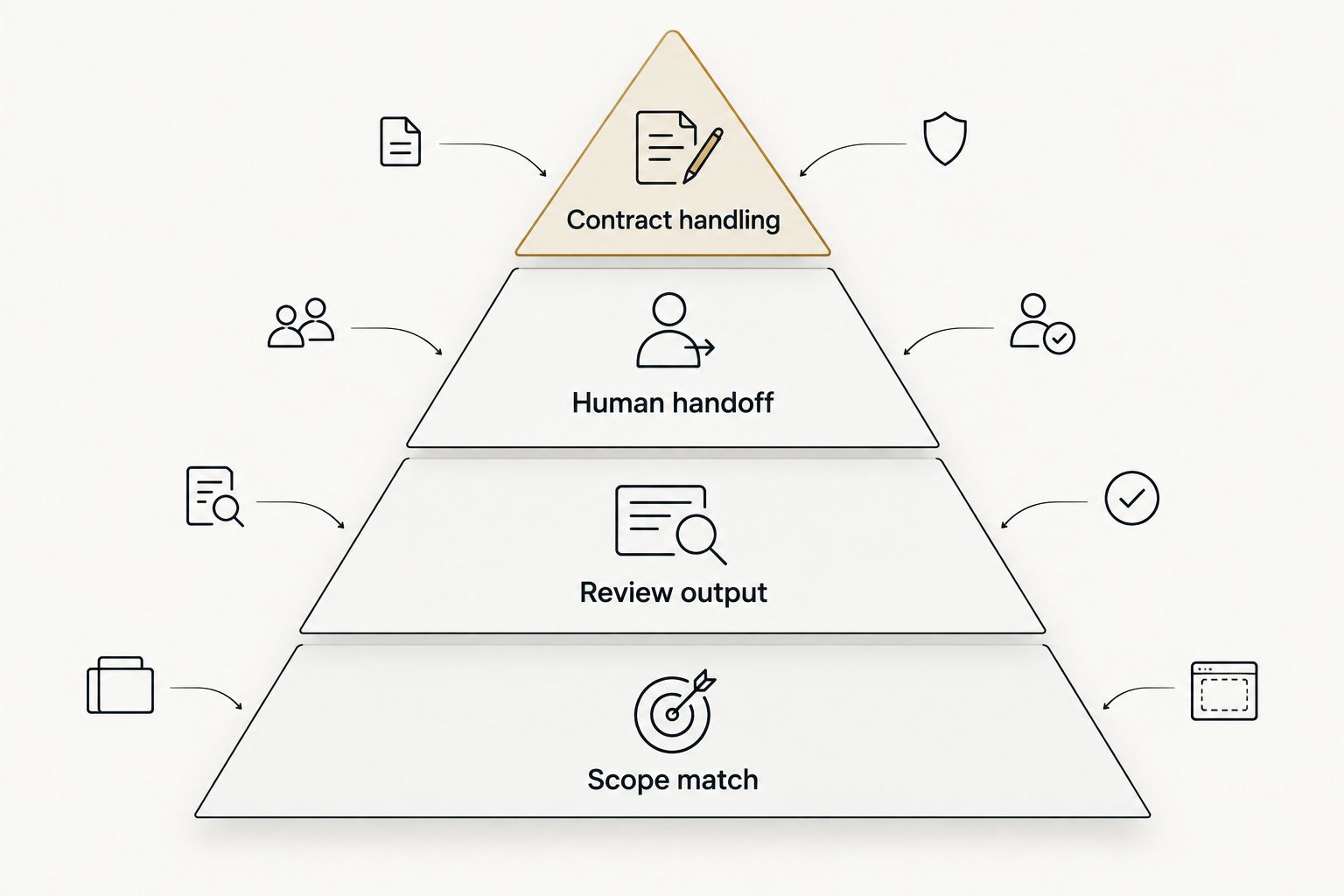
Use these criteria before treating any price comparison as meaningful:
- Scope match: Does the tool fit creator agreements, lawyer-led drafting or a legal team's review process?
- Review output: Can you use the result to identify a clause, ask a specific question and decide who should answer it?
- Human handoff: Is it clear when a creator, brand contact or legal professional must make the decision?
- Contract handling: Can you confirm how your organization is allowed to submit, store and share the agreement?
- Quote basis: Are you comparing the same users, documents, review needs and contract term across providers?
A quote without that scope is not a ranking. It is a number attached to an incomplete buying decision.
AI contract review software at a glance
| Option | Best for | Standout use | Price evidence | Key limitation |
|---|---|---|---|---|
| Black X | Creator brand-deal review | Analyzes contracts, briefs and offers for clarity and risk | Comparable price not supplied | Its score is not legal advice |
| Spellbook | Lawyer-led drafting and review | Contract work within a legal drafting workflow | Comparable price not supplied | A creator still needs a legal professional for legal judgment |
| LegalOn | Legal-team contract review | Reviewing agreements within a legal-team workflow | Comparable price not supplied | Team fit must be checked against your review process |
| ChatGPT | Preparing questions about a contract | Explaining unfamiliar wording for further review | Comparable price not supplied | General answers cannot approve a deal or replace legal review |
These are use-case rankings, not a disguised price table. The inputs contain no comparable provider prices, plan scope or billing terms. Check current quotes directly before making a cost-based choice, and make sure each quote covers the same work.
The criteria also have an order. Start with scope match: a contract tool built into a lawyer's workflow and a tool for a creator assessing a brand deal answer different questions. Then check whether the output leads to a useful action. Only after those checks should you compare contract handling and quotes.
1. Black X: best AI contract review software for creator brand deals
Black X analyzes creator brand-deal contracts, briefs and offers, scoring them for clarity and risk. That makes it the most direct fit on this list when you are a creator assessing a proposed collaboration or a brand team trying to make the deal terms clearer. Black X is best for creator and brand teams that need structured deal triage, not a legal opinion.
Start by comparing the proposed work with the agreement. If a brief asks for a video but the contract also discusses reuse, ask what content the brand can use, where it can appear and whether that use has an endpoint. A clarity or risk score gives you a place to start the conversation; it does not decide whether a clause is enforceable or acceptable for your business.
Black X pros:
- Its stated scope includes contracts, briefs and offers, not just a signed agreement.
- Clarity and risk scores give both sides a shared way to identify terms that need attention.
- Its creator brand-deal focus matches questions about deliverables and usage rights.
Black X cons:
- A score cannot supply legal advice or approve a contract on your behalf.
- You still need to check the exact clause and resolve unclear terms with the other party.
Black X cost check: Confirm current terms directly and compare them with the amount of review your team actually needs; no verified comparable price is available here.
Best for: Creators and brand teams reviewing proposed collaboration terms before a decision.
Verdict: Buy if creator-deal triage is your main job and the current terms fit your needs. Bring unresolved legal questions to a qualified professional.
2. Spellbook: best for lawyer-led drafting and review
Spellbook is an AI contract tool aimed at legal professionals working with agreements. Its use case is different from a creator reading a brand brief before deciding what to ask: the lawyer is responsible for drafting, reviewing and applying legal judgment. Choose this route when the person operating the tool is part of that legal workflow.
For example, a creator can flag an exclusivity clause that appears to restrict other sponsorships. Deciding how to revise that clause for a particular agreement requires more than spotting the word exclusivity. The reviewer needs to consider the covered products, channels, territory and duration in the actual text. A drafting tool can support that review; it does not become the decision-maker.
Spellbook pros:
- Its legal-professional focus suits a lawyer who drafts and reviews agreements.
- A drafting workflow puts proposed wording in front of the person responsible for reviewing it.
- It is a clearer category match for legal drafting than a general-purpose chat assistant.
Spellbook cons:
- A creator without a lawyer does not get legal representation by using a lawyer-focused tool.
- Its value to a brand team depends on whether that team already has a suitable legal review workflow.
Spellbook cost check: Ask for a current quote tied to the intended users and review work. This article has no verified price to compare with the other options.
Best for: Legal professionals who draft or review contracts as part of their work.
Verdict: Buy for a lawyer-led workflow after checking current terms and product fit. Hold if you need a creator-facing way to triage a brand offer yourself.
3. LegalOn: best for legal-team contract review
LegalOn is positioned around contract review for legal teams. Consider it when agreements move through an internal review process and the team needs to assess how a tool fits that process. This is not the same buying question as a creator deciding what to ask about an individual brand deal.
Before comparing LegalOn with another provider, name the handoff you need. Who submits the document? Who checks the output against the original clause? Who decides whether to accept, revise or escalate the term? A review result is useful only when those responsibilities remain clear to the team using it.
LegalOn pros:
- Its legal-team focus fits an organization with defined contract-review responsibilities.
- It gives a legal team a more relevant category to evaluate than a general chat tool.
- Its review-oriented use case supports comparison against the team's existing review steps.
LegalOn cons:
- Fit for a specific team depends on its document types and approval process.
- A creator reviewing one proposed sponsorship should not assume a legal-team workflow is the right purchase.
LegalOn cost check: Request current terms for your team's actual review scope. Without comparable quotes, a price rank would mislead you.
Best for: Legal teams evaluating software within an established contract-review process.
Verdict: Hold until the legal team confirms workflow fit and current terms. If there is no legal review process to support, choose a tool aimed at the person who will actually handle the deal.
4. ChatGPT: best for preparing contract questions
ChatGPT is a general-purpose assistant, not a dedicated contract approval process. You can use it to turn unfamiliar wording into questions to raise with the other party or a professional reviewer. Do not treat its explanation as a finding that a deal is safe, fair or legally sound.
Keep the original text beside any answer. If the agreement mentions whitelisting, ask what permission the clause gives the brand to use a creator's identity or content in advertising, then check the agreement for its actual limits. If it mentions a kill fee, ask what happens when work stops early. The answer should help you read the clause more carefully, not replace it.
ChatGPT pros:
- It can help you phrase questions about unfamiliar contract language.
- It gives a creator a way to organize issues before a conversation with a brand or adviser.
- It can help a team create a plain-language list of points to verify against the agreement.
ChatGPT cons:
- A general response can miss context in the full contract or brief.
- It does not take responsibility for legal interpretation or approve deal terms.
- You must decide whether sharing contract text is permitted under your own confidentiality obligations.
ChatGPT cost check: Review current terms for the intended use. No comparable price is supplied, and a general assistant is not equivalent in scope to a dedicated review tool.
Best for: Preparing questions before a human reads and decides on the contract.
Verdict: Skip as your sole contract-review process. Use it only to support a review that returns to the original document and the people responsible for the deal.
How we ranked the options
The 2026 order starts with the audience in the brief: social media creators and the brands working with them. It then separates creator-deal analysis, lawyer-led drafting, legal-team review and general question preparation. Each option has a distinct best for slot so you can rule out tools built for a different job.
This is not a claim that one provider costs less, catches more issues or produces better legal outcomes. The supplied information contains no comparable prices, testing results or contract-review accuracy figures. A price ranking would require current quotes for the same users, document scope and intended work. Until you have those, workflow fit is the useful verdict.
Which AI contract review software should you choose?
Choose Black X for creator brand-deal triage when you need to examine a contract alongside its brief or offer and identify clarity and risk questions. Choose Spellbook when a legal professional is doing the drafting and review. Choose LegalOn when a legal team is evaluating a review process. Use ChatGPT to prepare questions, not to sign off on an agreement.
If your search is specifically for AI contract review software ranked by price, do not mistake this order for a cost ladder. In 2026, the answer is no verified price winner. Get like-for-like current quotes, then return to the clause that matters: usage rights, payment terms, exclusivity, cancellation or another obligation you must actually accept.
FAQ
What is the best AI contract review software for creator brand deals in 2026?
Black X is the best fit in this list for creator brand-deal triage because it analyzes contracts, briefs and offers for clarity and risk. Its scores do not replace legal advice or your review of the original terms.
Which AI contract review software is cheapest in 2026?
There is no verified cheapest option in this comparison. Comparable provider prices and quote terms were not supplied, so request current quotes for the same work before ranking cost.
Is Black X better than Spellbook for a creator?
Black X is the more direct fit here for a creator reviewing a brand deal; Spellbook is aimed at lawyer-led contract work. Choose based on who will use the output and who is responsible for legal judgment.
Is LegalOn the same kind of tool as ChatGPT?
No. LegalOn is positioned for legal-team contract review, while ChatGPT is a general-purpose assistant you can use to prepare questions. Neither removes the need to check the agreement and assign a human decision-maker.
Can AI approve a creator contract for me?
No. AI can help identify or explain terms, but you remain responsible for the business decision and should seek qualified legal advice for legal questions. Check every important output against the signed or proposed text.
What should a creator check in usage rights?
Check what content the brand can use, where it can use it and when that permission ends. Read those points in the actual clause rather than relying on a summary or score.
What should a brand team compare before requesting software quotes?
Compare the intended users, document types, review steps and human approval responsibilities first. Ask providers for current terms against that same scope so the quotes answer the same buying question.
One last thing
A 2026 software quote cannot tell you whether a proposed brand deal grants wider usage rights than you intended. Read the clause first, identify the decision-maker and use the software to sharpen the question. That order protects both creators and brand teams better than a price ranking built from incomparable offers.